Shedding Light on Art: How to Illuminate Your Collection Professionally.
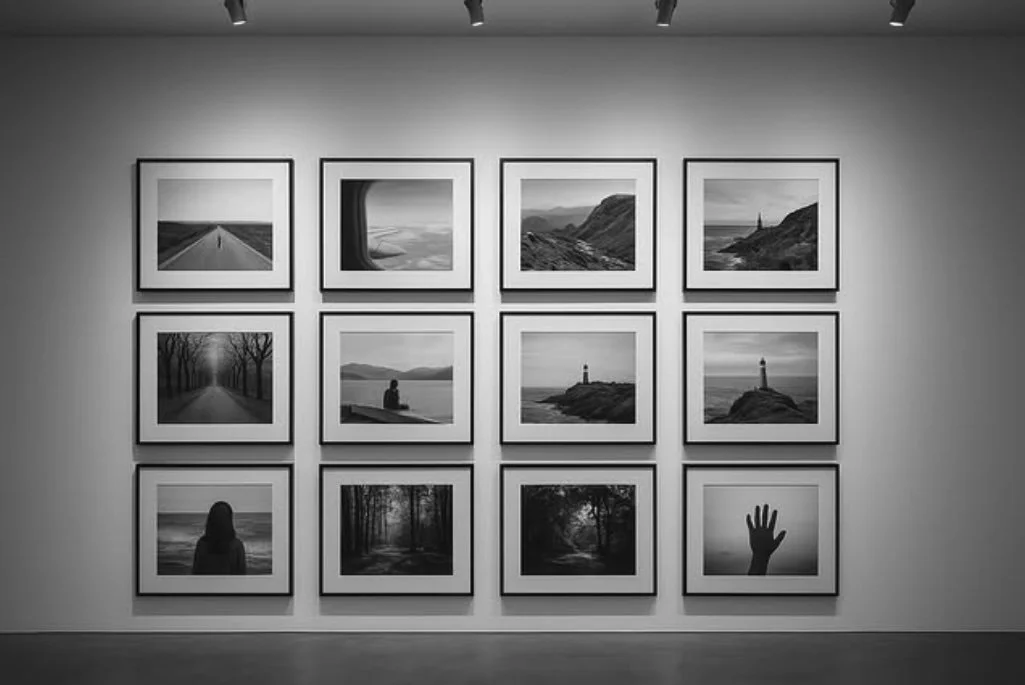
Artwork professionally illuminated in a London gallery
At Gilbert Art Services, our job doesn't end when a piece is perfectly levelled and securely mounted to the wall. Truly bringing an artwork to life requires a final, often overlooked element: lighting.
Whether we are installing a contemporary canvas in a light-filled Hampstead flat or positioning an antique oil painting above a Clapham mantlepiece, how a piece is lit determines both its visual impact and its lifespan.
So, how do you showcase your collection in its best light without causing irreversible damage? Here is our specialist guide to the art of illumination.
Lighting with Caution
The single biggest challenge in art conservation is that light damage is cumulative and irreversible. The very energy required to make colours visible is slowly breaking down the chemical bonds in paint, ink, paper, and textile fibers.
While natural daylight is often considered the most beautiful light source because it shows colours in their truest state, it is also the most destructive.
The Anatomy of Fading
If you notice an artwork losing its vibrancy, the blame can generally be split into four categories:
[ 40% UV Radiation ][ 25% Heat ][ 25% Visible Light Volume ][ 10% Environment ]
40% Ultraviolet (UV) Radiation: The highest energy wavelengths, responsible for the most severe fading.
25% Heat (Infrared): Causes materials to expand, contract, and brittle.
25% Visible Light: Even "safe" light causes slow degradation simply by its sheer volume and intensity.
10% Miscellaneous Factors: Humidity, airborne pollutants, and dust.
Because natural light delivers a massive dose of UV and infrared energy, daylight is brilliant for short-term viewing, but fatal for permanent presentation.
The Professional Standard: Why High-CRI LED is King
To protect your investments, artificial lighting is the safest and most consistent choice. However, a major misconception we encounter on-site is that any LED bulb will do.
Many standard commercial LEDs have a low Colour Rendering Index (CRI). This means they distort colours, muddy fine details, and flatten the rich textures of a painting. For artwork, you need High-CRI LED lighting (CRI 95+), which offers distinct museum-grade benefits:
Zero UV and IR Radiation: They emit no harmful ultraviolet or infrared rays.
No Forward Heat: Unlike old-fashioned halogen bulbs that act like mini-radiators against a canvas, LEDs remain completely cool to the touch.
Colour Accuracy: A high CRI ensures that the deep blues, subtle skin tones, or bright neon hues appear exactly as the artist intended.
Three Ways to Light Your Art: Which System Suits Your Space?
During a consultation, we look at the architecture of the room and how often you rotate your collection to recommend the right hardware setup.
1. Ceiling-Mounted Recessed Spotlights
Best for: Clean, minimalist aesthetics and permanent layouts. Deeply recessed spotlights keep the ceiling looking clutter-free. The trick here is the 30-degree rule: the light should hit the artwork at a 30-degree angle to prevent casting a shadow of the frame onto the art, while avoiding distracting glare and reflections on glazed glass.
2. Gallery Track Lighting
Best for: Contemporary spaces and active collectors. If you regularly swap out your pieces, moving from a large abstract canvas to a series of smaller framed prints, a track system is essential. It allows you to slide, pivot, and change the beam angles of individual fixtures instantly without ever needing to rewire a ceiling.
3. Dedicated Picture Lights
Best for: Period homes, dramatic focal points, and intimate moods. Picture lights attach directly to the frame or the wall just above the artwork, providing a self-contained pool of light. Sleek, minimalist brass or matte black bars work beautifully in modern spaces, while classic hooded designs elevate heritage interiors. They ensure the artwork remains the absolute focal point of the room.
Quick Checklist: Protecting Art in Naturally Lit Rooms
If your favorite piece happens to hang in a sun-drenched, south-facing living room, you don't necessarily have to move it to a dark hallway. You can mitigate daylight damage with a few professional habits:
Apply UV Window Film: A completely transparent film applied to your windows can block up to 99% of UV rays without changing the look of your room.
Invest in Conservation Glass: If your artwork is framed, ensure it uses museum-grade, UV-filtering glass or acrylic.
Use Mesh Blinds: Utilise sheer curtains or automated blinds during the peak sun hours of the day when the room is not in use.
Avoid Direct Travel Paths: Never place highly sensitive mediums—like watercolours, photographs, or limited-edition prints—in the direct path of an afternoon sunbeam.
Elevate Your Collection
The difference between a house with pictures on the wall and a beautifully curated home often comes down to lighting and precision placement.
At Gilbert Art Services, we don't just hang your art safely; we help you consider the entire environment so your collection looks spectacular today and remains protected for decades to come.
Planning a new layout or need advice on displaying a valuable piece? Get in touch with us today to discuss our professional picture hanging and curation services.